Discoveries
Official surprises from Ronaldsway
A shared duffle coat, sunshine burned onto cards, a door that had to be locked before the weather was read, and a year that lost the record in its last week. All of it is from official pages.
The shared duffle coat, and one souwester
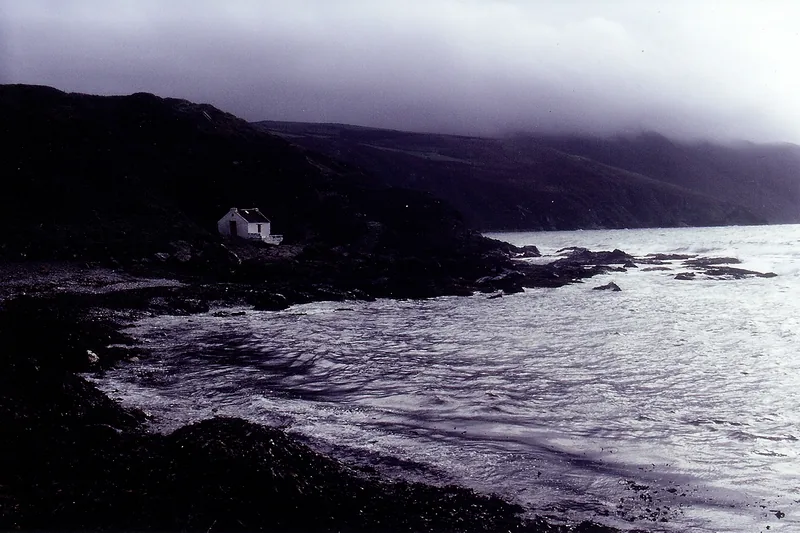
The about-us page does not tidy the early years into a vague “difficult conditions.” It tells you there was no heating in the control tower, and that in 1959 “Air Ministry management gave in to pressure and provided staff with a paraffin heater for the office, and a duffle coat – just one for all staff to share.” Two years later “they found funds for one oilskin, one pair of boots (big enough for anybody’s feet), and one souwester!” The boots had to fit everyone. The coat already did, by being singular. [source]
The first readings came from a barn
When the field was still HMS Urley, “the first observations were taken from a barn to the SE of the airfield, near to where the fire station is now, on May 7th 1946.” A proper home on the first floor of the control tower followed “a few weeks later.” It is an official beginning that still smells of hay, if you let it. [source]
Every hour, including Christmas
“Observations have been made every hour of every day since, 24/7, including Christmas.” Before 1972, that often meant walking out to the instruments, “day & night, in whatever conditions.” The official commentary is almost affectionate: “the worse the conditions, the more important it was to go out and measure them!” [source]
Lock the door, then go and read the wind
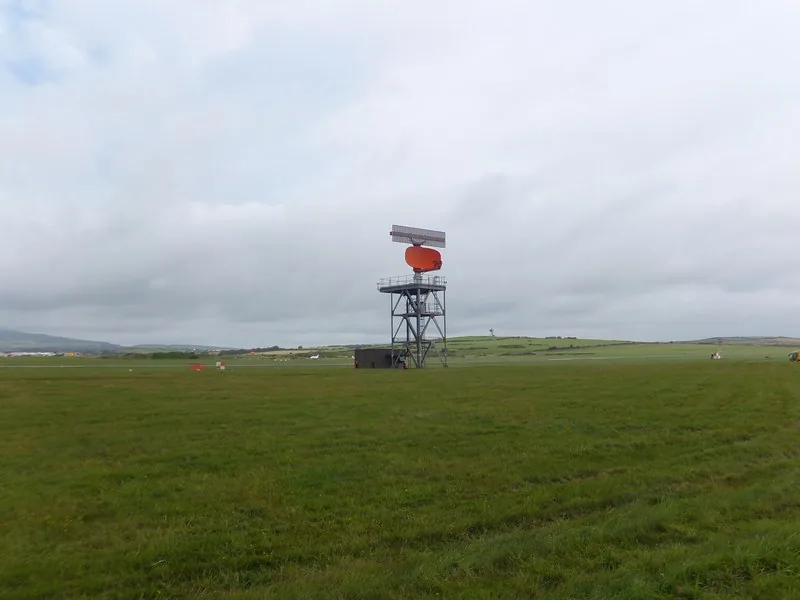
Airport security began in 1973 “with night-duty observers being asked to lock the door behind them when they went out for the observations.” The weather did not wait. The key, from then on, had to come too. [source]
You can telephone a forecaster
The about-us page makes a comparison that still surprises people who have only dealt with recorded messages and webforms: “unlike the UK, any member of the public can call and speak to a forecaster direct.” The same paragraph mentions “10s of thousands of hits” to weather.gov.im. The website is busy. The telephone, officially, is still answered by a person who can talk about the forecast. [source]
Sunshine, burned onto the cards
The 2025 annual report does not merely say that the year was sunny. It says “1762 hours of sunshine were burned onto the cards,” more than 100 hours above the 1991–2020 average, and the eighth sunniest on record. The figure caption names the instrument: a Campbell-Stokes recorder. Spring exceeded 700 hours, the sunniest spring recorded. A glass sphere, a card, and a scorch mark for an hour of sun is an older technology than a satellite, and in 2025 it was still how the official total was described. [source]
Warmest, until the last week of the year
On the 24-hour mean, 2025 ended as second warmest, behind 2023. It had been closer than that. “Right up until Christmas it was looking like it would be the warmest, but a change to cooler conditions in the last week brought the average down into 2nd place.” A year’s official ranking, altered after the decorations were up. [source]
A summer that beat 1995, with help from a warm sea
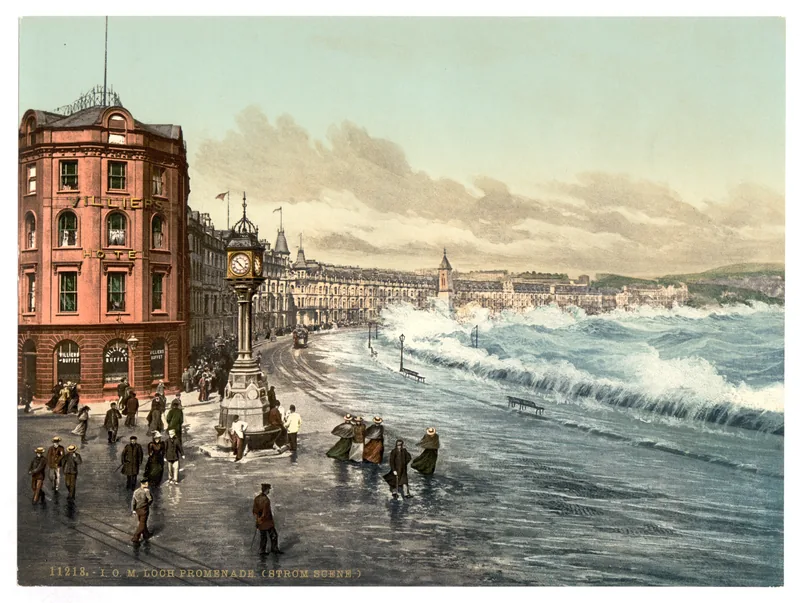
The three summer months of 2025 had a 24-hour mean of 16°C, “beating the previous record of 15.9°C from 1995.” The report is careful about how the record was set: “more as a result of consistently warm temperatures, rather than extreme peaks, assisted by unusually high sea temperatures keeping night time temperatures up, and reducing the cooling from sea breezes.” The sea, officially, was part of the reason the nights stayed up. [source]
May, and a spring that was hard on agriculture
May 2025 was “the warmest and sunniest on record.” The three spring months together were “the warmest and sunniest on record here at Ronaldsway, and 3rd driest.” March was “the driest since 1953,” with “only 13mm.” The report does not pretend that everyone was simply pleased: the low rainfall was “presenting difficulties for agriculture.” [source]
An October of 50.8 hours, and an October of 119.6
October 2025, in the annual report, was “the dullest on record, with only 50.8 hours” of sunshine. October 2026, in the monthly summary, had 119.6 hours, 12% above average, “despite the stormy spells,” and was headed “Mild and sunny with stormy spells.” Same calendar month, neighbouring years, and almost seventy hours between them. [source] [source]
A more easterly year, on the runway anemometer
Among the wind plots for 2025 is a note on the Runway 26 anemometer: “Note higher frequency of easterly direction in 2025.” It is a small official observation, and it sits beside a year whose mean speed, 12.3 knots, was close to average. The average can hide a change of direction. [source]
The top ten warmest years have all been since 2000
The 2025 report says the average daily 24-hour mean “has steadily increased by around 1 degree between the 1951-1980 value of 9.45°C, to the currently used 1991-2020 value,” and that “the 2025 mean of 11.27°C is almost another degree on top of that. The top 10 warmest years on record at Ronaldsway have all occurred since 2000.” [source]
Oik Emshyraght Roonysvaie
The October 2026 climate summary does not only speak in English. Under “Ronaldsway Met Office” it prints “Oik Emshyraght Roonysvaie.” The Manx name is on the official monthly sheet itself. [source]
Brian Rae’s MBE
In 2007, “Ronaldsway forecaster Brian Rae was awarded an MBE for his services to the community and meteorology.” The official history places that honour after the arrival of satellite, radar and computers, and before the move, in the same telling, to Viscount House. [source]
A name at the top of the report, and a name at the end
The 2025 annual report names Gary Salisbury as publication owner on the title page, in brackets, “Assistant Scientific Officer.” The closing page is signed “Gary Salisbury, Senior Met. Technician, Observations & Climate.” [source]
Keep exploring
- The first observations — the barn, and the official reports that say 1947.
- The 2025 year — the figures behind several of these discoveries.
- Myths versus facts — what the official pages do not actually say.
Enjoyed this island weather desk?
No pop-ups. No intrusive advertising. Just interesting stuff. A little support helps the next storms site get built.